

We weave collective voices and drive equitable systems change so that communities, hapū and iwi can do what they do best.
A partner for community action
BUILDING CAPABILITY
& CONNECTIONS
Across and between
communities, hāpu
and iwi
ADVOCATING
FOR CHANGE
So funding better responds to community, hāpu and iwi needs and aspirations
TAKING THE NEXT STEPS
IN OUR TIRITI JOURNEY
Both reflecting and reaching out
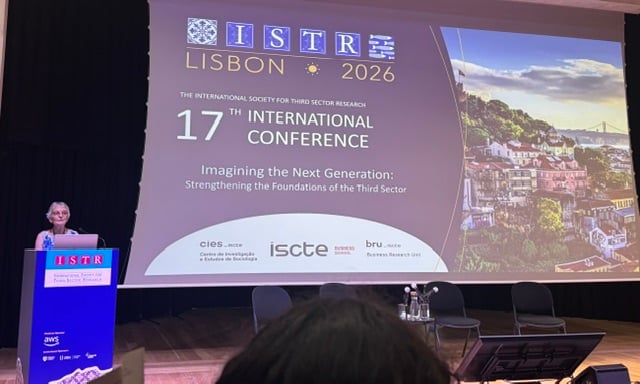
International Third Sector Research Conference 2026, Lisbon
If you dug a hole in Aotearoa and managed to get through the earth’s core and pop up the other side, you’d end up in Portugal. So it was hilarious to sit down in the first session and find out I’m sat next to another New Zealander! It took being the other side of the world for Carolyn Cordery and I to meet, and awesome to hear her open the conference in te reo Māori. Portugal was selected for this year’s this year’s International Society for Third Sector Research conference as the last decade has seen investment in their ‘social economy’ through legislation, infrastructure, leadership and funding. The conference started with a youth plenary session on addressing global challenges and how will the sector be transformed. Young people from Zambia, the Philippines and the UK came together on this panel.The biggest takeaway for me wasn’t just what was said. Unlike any other session so far, the moderator and panel had co-designed the season together and thought carefully about how to get us ready for the conversation with an interactive quiz and crowdsourced reflections. The conversation met us where we were and included us along the way.Pau Apines from the WeSolve Foundation in The Philippines shared insights as an incubator for cross-sector relationships. She said the future is less about organisations and more about ecosystems and coalitions. Where are the spaces of trust to move spaces forward?They build communities of care, take time with each other, and compensate young people fairly. The future is more collaborative and intergenerational. Another session at the International Society for Third Sector Research sector conference explored why Portugal has become one of Europe’s social innovation leaders.The answer was investing in the ecosystem:• creating enabling public policy• resourcing a sector umbrella organisation• investing with European Union funding• backing experimentation• building social entrepreneurs• supporting investors.This ecosystem lens was evident in how @Portugal Inovação Social, instead of “How will you sustain this beyond our funding?”, asks:“If this works, how will you disseminate the impact?”The focus becomes the sustainability of the impact, not necessarily the sustainability of the organisation itself. In the local session I asked a question about language.In Portugal, people talk about the Social Economy; a recognised part of the economy alongside government and private enterprise.In Aotearoa New Zealand, there are many different ways we describe our own ecosystem.Depending on who you ask, we’re the community and voluntary sector, Tangata Whenua, community and voluntary organisations, the charitable sector, the NGO sector, the third sector and the for-purpose sector. Philanthropic foundations, funders and social enterprises are discussed separately again.Those different terms reflect real histories, identities and ways of organising. I don’t think the answer is the ‘easiest’ single label.Te Tiriti o Waitangi shapes relationships here in ways that have no direct equivalent, and iwi/hapū cannot be understood through the same lens as charities or social enterprises.Portugal’s language gives visibility to the collective contribution of organisations that strengthen communities, build social cohesion, create employment and generate public value. It creates a platform for diverse organisations to advocate together while retaining their individual identities.Perhaps that’s the question worth bringing home.Not what […]
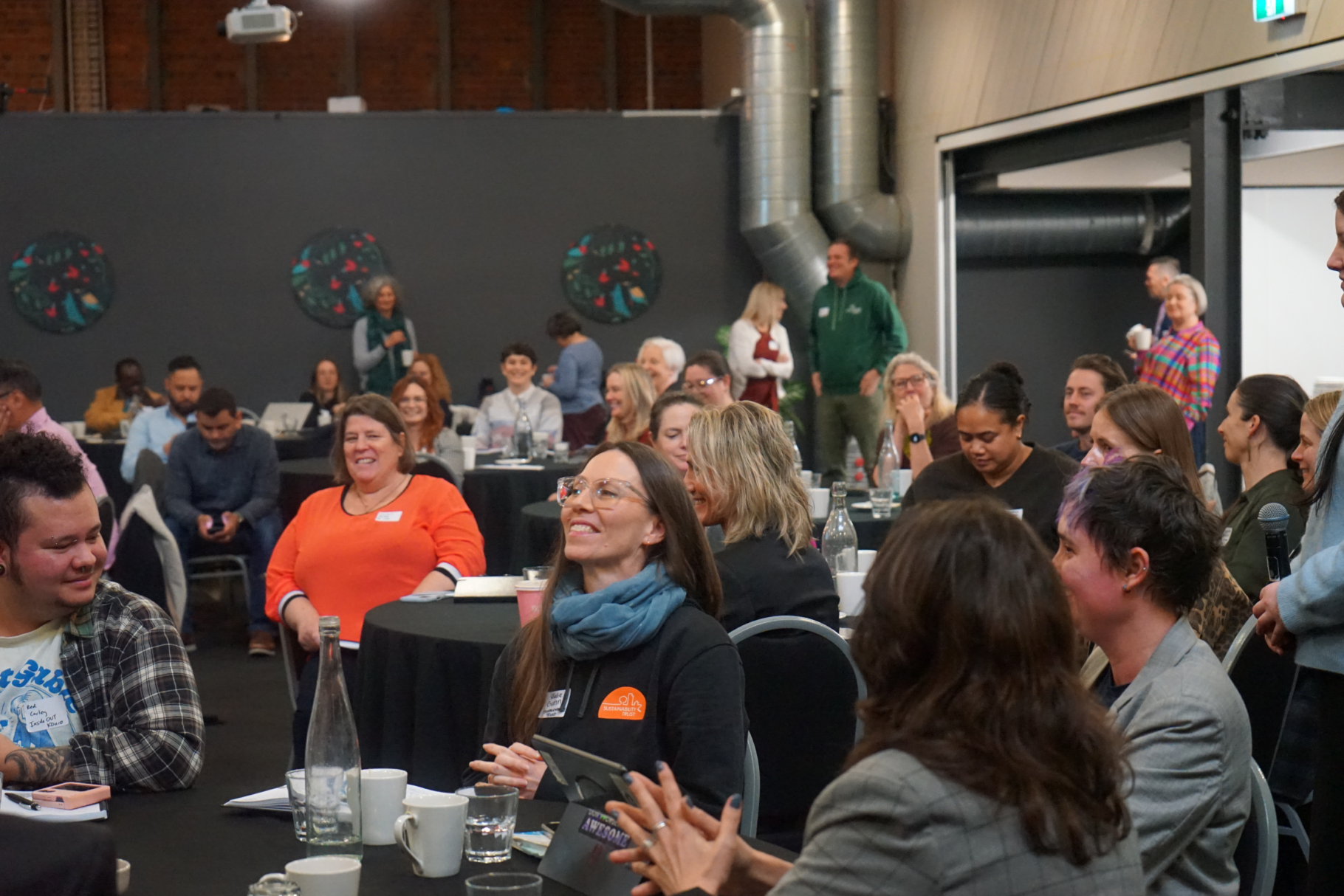
Tātou Tātou – coming together for urgent change
On 20 August 70 people from across the sector gathered in solidarity with the whānau and communities they serve to call for urgent change. We joined with Mana Communications, Wellington City Mission, Youth Inspire and Take 10 to bring this to the heart of the capital. The live-polling was stark. Ninety-two per cent of organisations in the room are facing funding challenges. Eighty-six per cent have seen demand increase, and sixty-eight per cent cannot meet it. Twenty-seven per cent are turning people away and thirty-eight per cent are reducing services and functions. Only four per cent had received funding increases above inflation, and only two per cent say that things feel better than they did three years ago. So we sat, in our grief and in our strength, and we told it straight to the political panel. The politicians (incumbent and aspiring) reflected that this may be an opportunity for them to grow up as a Parliament and come to cross-party agreement for a long-term sector strategy and to formalise their relationship with an increasingly connected sector. Media pick up included Breakfast TV (6.40am), RNZ, and this (paywalled) op ed in The Post. We worked together on a shared statement, which we encourage you to adapt and use: The state of the sector Generosity is part of the fabric of our country. Across Aotearoa, we work alongside people whose lives rarely fit neatly within the systems designed to support them. Need seldom arrives alone. A request for food often reveals a whānau facing pressure across many parts of their life. We see the whole person. Our relationships and local knowledge allow us to reach people who may otherwise be missed or passed between government systems. We also see change early and can respond before hardship becomes crisis. Yet much of this value remains invisible. Those closest to communities are often furthest from the policy discussions and decisions affecting them. At the same time, rising demand, short-term funding and heavy compliance are stretching organisations beyond capacity. Competition for scarce funding consumes time and makes collaboration an afterthought. Ultimately, people wait longer for support or fall through the gaps altogether. At present, our sector is subsidising core government responsibilities. What a thriving sector could look like A thriving sector creates a thriving Aotearoa. People can get help early, close to home, through iwi, hapū and organisations they trust. They can move between services without navigating a maze or repeatedly having to tell their story over and over again. Our sector’s diversity is a strength. Different organisations provide choice and create trusted pathways into support for different communities. We can work together, respond as needs change and address the systems that allow hardship to take hold. When support works this way, whānau are stronger and communities are more resilient. More people can participate fully in society, and fewer reach crisis in the first place. What we can do to move forward together Moving forward requires a genuine partnership between government, iwi, the sector and those who invest in our communities. We need a shared direction that extends beyond election cycles and is shaped by […]

Hui E! Haratua | May Pānui
Tēnā koutou katoa, This pānui comes to you in the middle of Youth Week 2026. This Youth Week our team were being hosted by Ngāi Tahu, and had the opportunity to hear from the team at Tokona Te Raki about their mahi scaling and activating hope with a toolkit going into 500 classrooms, and working alongside 70 civically engaged rangatahi from across the motu. This week has certainly been a big one with our second kanohi ki te kanohi hui with the Tangata Whenua Forum here in Te Whanganui-a-Tara, with a three year work programme, Constellation engagement and meetings with government officials. It is with a mix of pride and heavy hearts that we farewell our Kai Tūhono, Jess, after 18 months of being the absolute backbone of Hui E!, holding us, the Community Constellation, and the Tangata Whenua Forum together. Jess is off to a dream role coordinating local environmental kaupapa. Jess, we will miss the sunshine-in-human-form that you are. Haere pai atu, e hoa. Finally, CNA hosted a political panel last week to give communities a direct line to political parties ahead of the election. MC Jehan Casinader rightly observed that the conversation was eerily cordial; “community” treated as a benign, uncontroversial topic that can be kept safely separate from the gritty realities of funding cuts and chronic underinvestment. But communities are not a polite sideshow. We will not settle for a model that thanks us for doing what the state can’t or won’t, while expecting us to do more and more with less and less. Watch for our Budget 2026 analysis at the end of next week. Ngā mihi nui, Katie and Patrick PS. Some of you may have noticed that Katie is using a different surname now. She has gone back to using her birth surname of Boxall, so if you see that name instead of Bruce, you’ll know it’s the same Katie! What Hui E! has been working on New interactive map launched We are excited to bring to you the first look at our newly launched interactive map of the Community Constellation – what we all do and how we are connected and collaborating. Please share this far and wide so that the supports for our sector are transparent and accessible. Follow this link to view the map: https://www.huie.org.nz/community-constellation-sector-mapping/ Submission on proposed Policing Amendment Bill Community resilience comes from being community-led and community-rooted. So does community safety. We recently submitted on the Policing Amendment Bill. Community organisations build trust every day with rangatahi and whānau who have reason to be wary of authority. This Bill makes that work harder by widening Police powers without fixing the equity problems already identified. Follow this link to read the submission: https://www.huie.org.nz/submissions/ Social Investment Agency update Hui E! have been working at pace to secure a first up meeting with the Social Investment Agency’s new Chief Executive Brendan Boyle who has been in office less than a month.In the meantime, the new community-led commission pathway is open for expressions of interest, closing on 12 June: https://www.sia.govt.nz/social-investment-fund/pathway-three-community-commissioning. Watch your email inboxes for updates. Impact of rising fuel costs on […]
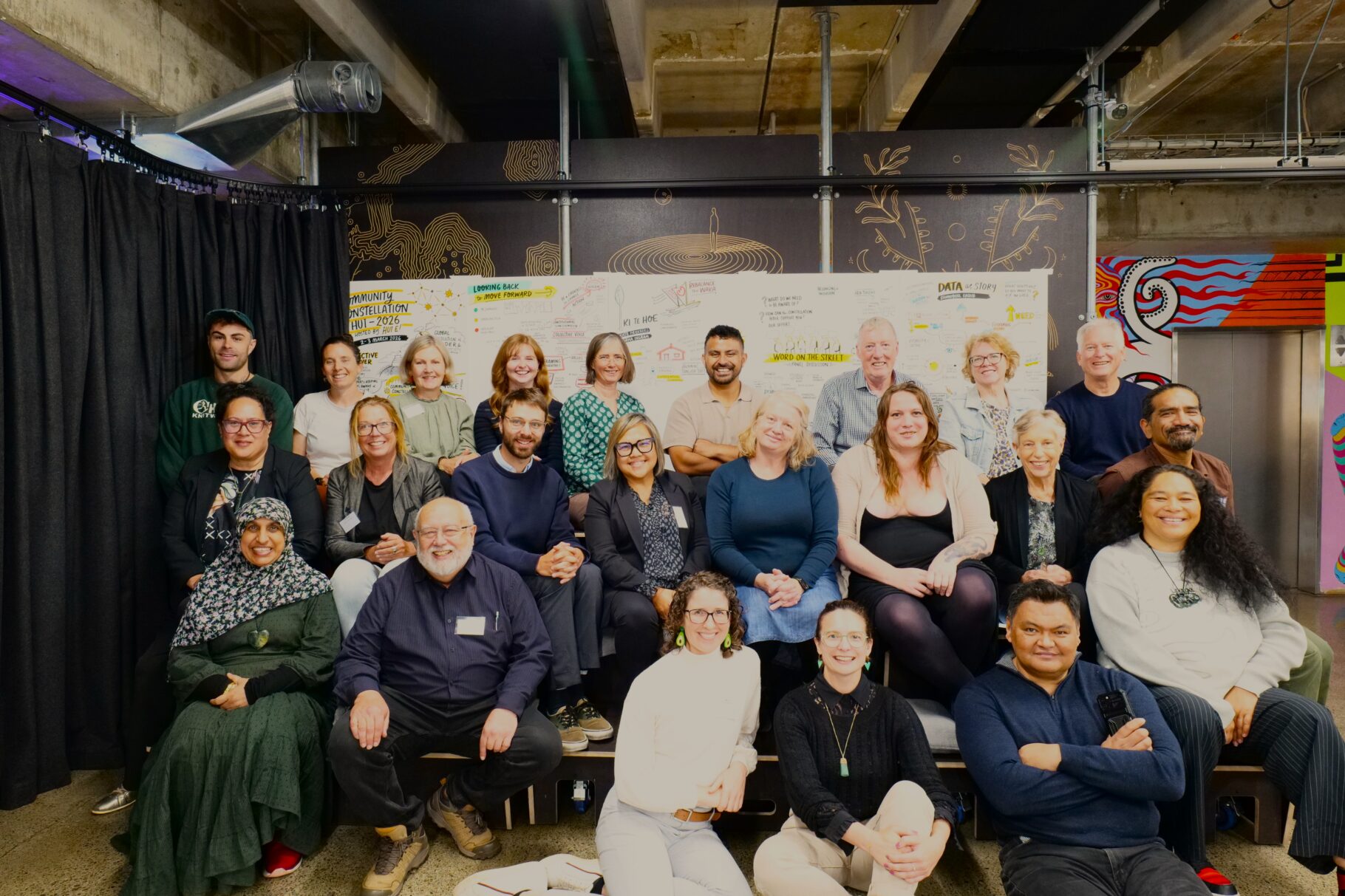
Hui E! Poutūterangi | March Pānui 2026
Message from the Hui E! kaiwhakahaera | chief executive When your job is convening brilliant people to meet and spark off of each other, then a highlight always has to be the annual Community Constellation hui where we come together kanohi-ki-te-kanohi. The energy, action-focus and stretch into uncomfortable issues and conversations was infectious. We got to share in a few experiences of a papatipu leader in Ngāi Tahu who challenged us to sit in the problem and look for its crux without jumping to solutions. This was a really powerful way to gain clarity before acting, and one I am definitely going to use myself more often. We focused on sharing and activating what already exists, so look out for an interactive map of our collaboration and independent analysis of sector data soon. Kia pai to rā,Katie Bruce What we’ve been working on In-person Community Constellation Hui Urgency, collective action, bravery and centering Te Tiriti were the sentiments echoed at Hui E!’s annual convening of the Community Constellation. The Community Constellation, a collective of 25 peak body and capability building organisations convened by Hui E!, has now been meeting since late 2024. Brought together with the shared purpose of collective action to advocate and make visible the value of the tangata whenua, community and voluntary sector. While it was acknowledged there is immense challenges within the sector from funding to increasing demand there was also a commitment to action and renewed energy to move forward. Some key actions that the Constellation is drawing inspiration on are: As we move forward into election year, there is opportunity to pool the talent, resources, expertise and passion for community. How will you connect? Starting in April Hui E! will be sharing behind the scenes, spotlights and interviews with the Community Constellation on Linkedin. Social Service Providers Aotearoa Sector Leaders Hui Hui E! Kaiwhakahaere Matua | Chief Executive, Tangata Whenua, Patrick Gemmell joined a sector leader kōrero hosted by SSPA in early February. Leadership, collaboration, Te Tiriti, devolution and data use were key themes. To see read outtakes follow this link. Charity Services Hui This quarter’s meeting with Charities Services focused unsurprisingly on the hard deadline for incorporated societies to re-register, as well as opportunities to simplify and reduce compliance for small charities. Updates from Charities Services: Charitable incorporated societies will need to go through the full charities registration process if they miss the 5 April deadline to re-register as an incorporated society. Incorporated Societies Register If incorporated societies are not re-registered by April 5, they risk serious legal, financial and tax consequences and will be struck from the Charities Register. The consequence included losing all access to the organisation’s bank accounts. If you are a peak body for incorporated societies, now is the time to communicate to your members that they must re-register before the deadline to continue operating. Information on how to re-register can be found through the NZ Companies Office: If you are stuck, use the secure web message via myIR, and submit even a draft or an update of where you are with the process by 5 April. Also note that incorporated Societies that haven’t yet reregistered and likely cannot comply with their rules for notice etc now to approve new rules should use Schedule 1, clause 9 of the Incorporated Societies Act to adopt new rules and reregister – it’s a shortcut provision that means they don’t need to comply with their existing rules. Key part of clause is below. Schedule 1, clause 9: Existing society may amend its rules to facilitate reregistration This clause applies— (a) to […]